
Plant care guide
Azalea
Florist azalea · Rhododendron hybrids
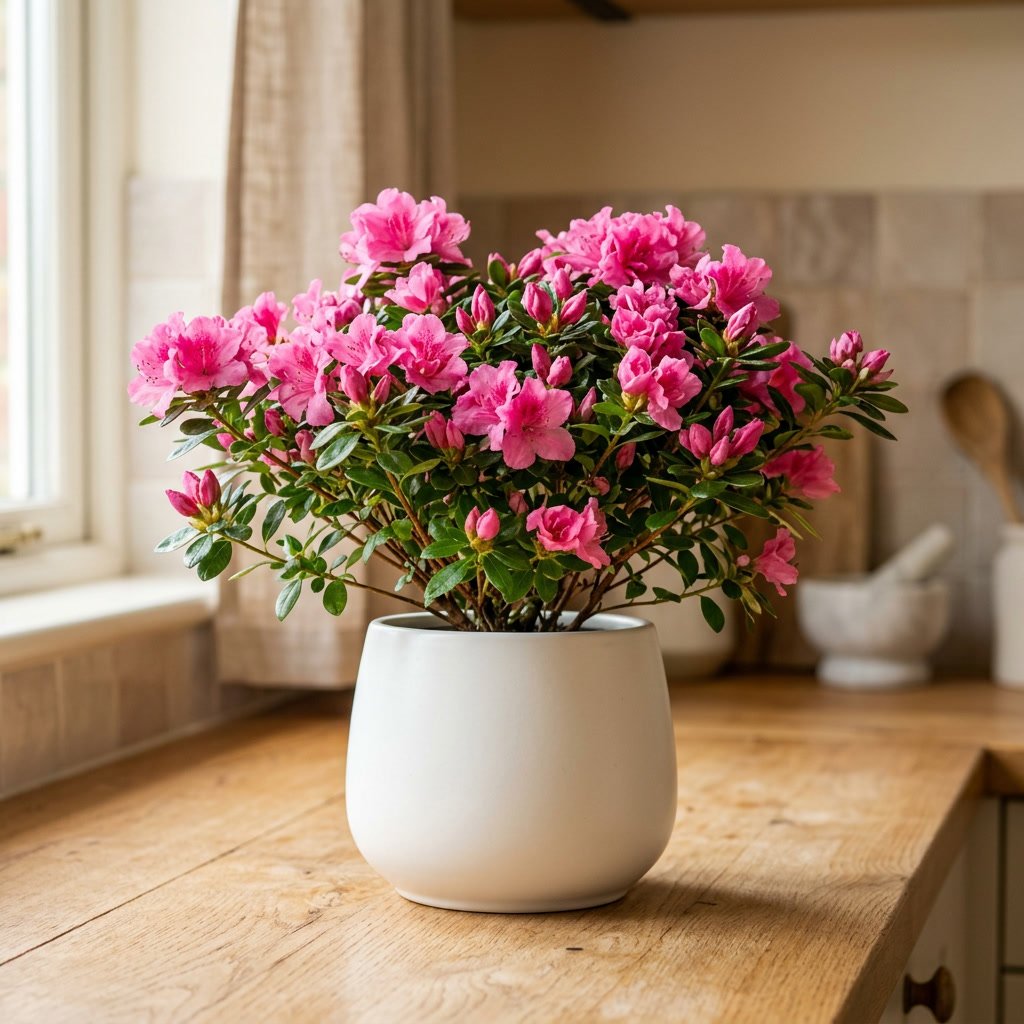
A flowering azalea brings a generous display of color to a bright room. Cool temperatures and careful watering help the flowers last. This guide covers the potted florist azaleas commonly given as gifts, with planting and outdoor guidance below.
Iowa State University Extension and the University of Missouri inform this starting point. A named cultivar has not been established for the pictured plant. The photograph is a pink azalea in a white ceramic pot, used with permission from Pacific Royal.
At a glance
Light
Bright indirect light while flowering
Avoid harsh direct sun
Water
Check daily, when the surface begins to dry
Never dry the root ball completely
Temperature
A cool room around 60–65°F
Helps the flowers last
Humidity
Avoid hot, dry air
Keep it away from heating vents
Soil
Acidic potting mix
Good drainage
Pet safety
Toxic to cats and dogs if eaten
Keep it out of reach
Detailed care instructions
Names and habit
Azaleas belong to the genus Rhododendron. Florist azaleas are selected and grown for indoor flowering displays. Many are associated with Rhododendron simsii and its hybrids. The Royal Horticultural Society and Chicago Botanic Garden are the sources for this identity. A pink flower alone does not identify a cultivar or establish its winter hardiness.
Light
Place a flowering azalea near a bright window, protected from strong direct sunlight. Texas A&M AgriLife recommends bright indirect light during flowering. A dim interior display spot should be temporary rather than its long-term home.
Water
Check the surface daily. When it begins to feel dry, water until runoff leaves the drainage holes. Lift a removable nursery pot out of its decorative cover, water it in the sink, let it drain, then return it. Empty any water trapped in the outer container. Iowa State University Extension is the source. These are care targets, not a fixed watering calendar.
Fine roots near the pot’s edges can dry quickly. Do not wait for a completely dry root ball. If the mix has dried and water runs around it, briefly immerse the nursery pot to rewet it, keeping the flowers above water. Remove it after the bubbles subside and drain it thoroughly. This is a recovery step, not permanent soaking. The University of Missouri is the source.
Potting mix and drainage
Use a commercial mix formulated for acid-loving plants. Keep moisture available without excluding air from the roots. Yellowing can reflect unsuitable pH or root damage, so adding fertilizer is not always the answer. The Master Gardener Association of San Diego County is the source.
Where water is very hard, rainwater is useful for maintaining an acidic growing environment. Avoid alkaline additions to the mix. The Royal Horticultural Society is the source.
Temperature and humidity
For the flowering display, aim for a bright, cool room around 60–65°F. Iowa State University Extension recommends this range. Heat can shorten enjoyment of the blooms. The University of Georgia Extension makes the same heat warning.
Avoid long exposure to hot, dry air. A room humidifier is a practical way to improve dry indoor conditions without repeatedly wetting petals. Provide gentle air circulation and keep the plant away from vents. The University of Georgia discourages misting gift plants because it can encourage foliage disease.
Fertilizing
A newly received flowering gift generally does not need immediate feeding. If you keep the plant, begin an appropriate feeding routine as active growth resumes. The University of Georgia Extension is the source.
University of New Hampshire Extension recommends monthly acid fertilizer during active growth. Use a product labeled for container-grown azaleas and follow its rate. Do not combine several fertilizers or use extra feed to force blooms.
Repotting and planting in a container
Repot after flowering if needed. Move up only about 1–2 inches in pot diameter, using an acidic mix. The Royal Horticultural Society is the source.
Handle the existing root ball gently. Avoid stripping away the mix or tearing delicate roots. A plant finishing its flowers does not automatically need a larger pot. The University of Missouri is the source.
A practical container setup is to keep the plant in a nursery pot with drainage holes inside a decorative ceramic cover. Check for trapped runoff after every watering. The ceramic pot is a display container, not a reservoir. Iowa State University Extension and the University of Georgia Extension are the sources for this drainage practice.
Pruning and cleaning
Remove faded flowers carefully. If you keep the plant for another season, lightly pinch vigorous shoots during the early growing period to maintain shape. Avoid late pruning that removes developing flower buds. University of New Hampshire Extension places that pinching by July.
After flowering and repeat blooms
The end of flowering does not mean the plant has died. You can continue growing it, but another greenhouse-style display takes more effort than routine watering. The Royal Horticultural Society and University of New Hampshire Extension are the sources.
Published recommendations differ on how practical home reblooming is. Iowa State University Extension describes it as impractical for typical home conditions. The Royal Horticultural Society provides a growing-on approach and cautions that another strong display may take a year or two without greenhouse conditions. Both support setting realistic expectations.
University of New Hampshire Extension describes summer growth followed by a bright, frost-free cool period around 45–50°F before moving the plant to a warmer room for flowering. This seasonal treatment is different from the 60–65°F display temperature above. An ordinary warm living room may not provide it.
Pests and other damage
Look under the leaves and around the shoots during watering. Spider mites and lace bugs are among the pests Clemson Extension reports on azaleas. Identify the cause before treating. Move an affected plant away from other indoor plants while investigating.
Pets and handling
Azaleas are toxic to cats and dogs if eaten. Effects can include vomiting, diarrhea, weakness, and heart problems. Keep the plant and fallen flowers away from pets and children. If a pet eats any part, contact a veterinarian promptly rather than waiting for symptoms. The ASPCA and the University of Missouri are the sources. This guide is not veterinary advice.
Growing outdoors
A florist azalea is not automatically a hardy landscape azalea. Chicago Botanic Garden advises keeping gift azaleas in containers, moving them into partial shade for summer after frost risk passes, and bringing them back indoors before autumn freezing.
Outdoor considerations
- For an unidentified florist hybrid, keep the container so the plant can be moved for protection.
- Choose sheltered partial shade rather than an exposed, hot patio.
- Keep checking the pot for moisture outdoors. It can dry faster than expected.
- Permanent in-ground planting needs a known cultivar with verified suitability for the local climate. A photograph cannot establish that.
- If a plant is confirmed hardy for the site, use acidic, organic-rich, well-drained soil and protect its shallow roots with mulch.
Regional considerations
These notes apply the sources’ temperature, light, and watering guidance. They are not cultivar-specific climate guarantees.
Hot and dry
Choose a cool indoor location, or a sheltered outdoor position during suitable weather. Heat and low humidity increase drying. Check the root ball often and protect the plant from intense sun. The University of Georgia Extension and Texas A&M AgriLife are the sources.
Warm and humid
Mild conditions may permit longer outdoor enjoyment. Keep drainage effective, and confirm the cultivar before treating the plant as a permanent garden shrub. The University of Missouri and Chicago Botanic Garden are the sources.
Cold winters
Keep a florist azalea protected indoors before frost. Cold-hardy garden azaleas sold locally are a different purchase with different outdoor limits. Chicago Botanic Garden is the source.
Coast
A mild location may make cool, bright growing conditions easier to provide. Use a sheltered container position and assess local frost risk. A coastal location alone does not prove winter suitability. Texas A&M AgriLife and Chicago Botanic Garden are the sources.
Common questions and troubleshooting
| What you see | What to consider |
|---|---|
| Flowers wilt and the pot feels light | The root ball may be drying. Check the moisture and rewet it thoroughly, then drain. The University of Missouri is the source. |
| Wilting while the mix stays wet | Check drainage and the roots rather than adding more water. The University of Missouri is the source. |
| Buds shrivel or fail to open | Review watering and growing conditions. Drought can interfere with buds. The Royal Horticultural Society is the source. |
| Flowers fade quickly | Move the plant away from heat and strong sun to a cooler, bright location. The University of Georgia Extension and Texas A&M AgriLife are the sources. |
| Yellow leaves | Check the roots, moisture, and suitability of the acidic mix before feeding. The Master Gardener Association of San Diego County is the source. |
| No new flowers after the display | Repeat blooming needs seasonal treatment and may be difficult indoors. Iowa State University Extension and University of New Hampshire Extension are the sources. |
| A pet chewed the plant | Contact a veterinarian promptly. Azalea can cause serious poisoning. The ASPCA is the source. This guide is not veterinary advice. |
Sources
Reviewed 2026-10-26 from the publications below. River & 7 prepared this guide. It is not a personal medical or veterinary opinion.
- Caring for a flowering gift azalea. Iowa State University Extension. Reviewed 2026-10-26.
- Azaleas for Early Indoor Color. University of Missouri. Reviewed 2026-10-26.
- Azaleas indoors. Royal Horticultural Society. Reviewed 2026-10-26.
- Care of Holiday and Gift Plants. University of Georgia Extension. Reviewed 2026-10-26.
- Azalea. Texas A&M AgriLife, Aggie Horticulture. Reviewed 2026-10-26.
- Planting Azaleas. Chicago Botanic Garden. Reviewed 2026-10-26.
- Azalea. ASPCA Poison Control. Reviewed 2026-10-26.
- Care of Flowering Gift Plants in the Home. University of New Hampshire Extension. Reviewed 2026-10-26.
- Growing Azaleas in Pots. Master Gardener Association of San Diego County. Reviewed 2026-10-26.
- Azalea and Rhododendron Insect Pests. Clemson Cooperative Extension. Reviewed 2026-10-26.
- Pink azalea in a white ceramic pot. Pacific Royal. Reviewed 2026-10-26.